-
 By
-
-
 19 Oct, 2026
How Can Technology Increase Workplace Productivity?
Key Takeaways
- Automate repetitive tasks to reduce manual work and empower staff to focus on productivity.
- By implementing a productivity management system, you can track activities, workloads, deadlines, and performance efficiency.
- Enhance employee performance by using performance management software to plan, gather feedback, conduct appraisals, and create development plans.
- Evaluate the actual outcomes to demonstrate that the technology is effective by comparing results before and after its implementation.
- Facilitating remote collaboration with cloud-based project management software provides access to work, documents, and task updates.
- Providing staff training helps employees to use digitisation confidently.
Productivity in the workplace isn’t determined by how long an employee sits at their desk anymore. Instead, it is dependent on how well businesses use time, resources, communication, and daily activities. Many businesses use digital technologies and Artificial intelligence (AI). With these technologies, it is possible to gain a competitive advantage through greater efficiency, fewer routine tasks, and improved performance results.
According to Microsoft’s 2024 Work Trend Index, 75% of knowledge workers worldwide use AI. The research involved 31,000 participants from 31 countries and showed that AI tools have already become a part of everyday work. However, businesses need more than just using AI; they have to apply technology in their daily tasks.
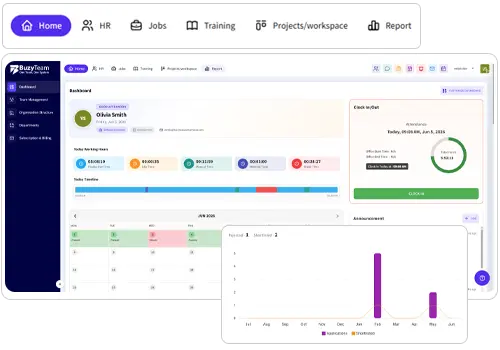
With the help of productivity management software, businesses can manage their workforce through a single centralised platform that covers employee management, task management, time management, project management, collaboration, training, and reporting.
In this article, you will learn how new technologies can help you improve workplace productivity. By implementing these steps, you can easily increase productivity without micromanagement.
Let’s dive in more!
1. Automating Repetitive Activities
Technology increases productivity in workplaces by automating repetitive administrative tasks. Workers spend a significant amount of time performing work such as creating reports, making changes in Excel sheets, planning meetings, sending emails, and entering information manually. With the introduction of automation tools, employees will have much less work like this and will be able to free up their time to focus on tasks that require originality and critical thinking.
For example, automated reporting tools collect data from various departments and provide a summary without requiring any action from the employee’s end. An automated tool in employee management software is AI-based; it can summarise meetings, prepare documentation, and organise information. It can also be used for various approvals and sign-off, task distribution, notifications, document management, and so on.
2. Improving productivity management with digital tools
Productivity management requires knowledge of how employees spend their time on tasks, how work is carried out, and how the team can achieve desired results. If the systems are not in place, management might have trouble identifying the root causes of the project running late or having an unequal workload.
The use of productivity management software solves the problem of blocked project progress and enables the tracking and management of responsibilities.
The capabilities include:
- Projects and deadlines
- Time and attendance
- Automation and notification
- Workload distribution
- Productivity analysis
- Time tracking of tasks
For instance, markets can handle content preparation, editing, approval, and publication through a common workflow. As a result, management can figure out what is left to be done and why it is delayed.
3. Boosting employee efficiency using Technology
Employee productivity directly impacts workplace efficiency. If workers are provided with clear expectations, receive constant feedback, and have everything they need, they are better equipped to meet their objectives.
A performance management system can help businesses set targets, track progress, assess performance, and identify opportunities to improve their employees’ skills. Businesses no longer need to wait for the annual review to connect with their employees. Businesses can use specialised software that enables regular communication between the parties, featuring target creation, accurate indicators, establishments, feedback logs, review lists, and individual development plans.
For instance, customer support departments may use this system to monitor the speed of responding to queries, the level of satisfaction of their clients, and how many issues have been solved. Knowing all these things allows managers to identify skills that need development and appreciate good performance.
A performance management system can be implemented to develop personal plans and clearly demonstrate how an employee’s work fits into the larger corporate scheme. Artificial intelligence can make this process more efficient by identifying patterns in performance data.
4. Use of Cloud-based project management software
In traditional project management, spreadsheets, massive email exchanges, and disparate software are used most of the time. It creates many obstacles to workers’ access to new and timely information, meeting deadlines, and collaborating with colleagues.
To eliminate such issues, cloud-based project management applications were developed to provide access to projects via the internet. In this way, employees can work on the project remotely while collaborating with everyone in real time across several platforms. The best part is that managers can track time in real time, check the status of project progress and assign tasks using a single dashboard. The key features are following:
- Centralised dashboard and task board
- Timeline of project, milestones, and dependencies
- Task assignment, priorities, and deadlines
- Real-time updates and notifications
- Document management and file sharing
- Progress report and workload visibility
A good example of this is the installation of a cloud-based platform within a software development team to run sprints, assign development tasks, report bugs, and track milestones.
These are some of the tools that enable organisations to avoid misunderstandings and promote accountability by helping to track task ownership and status, and to update task progress.
5. Improving communication and cooperation
Ineffective communication may result in defective work, failed deadlines, or misunderstandings. Technology increases cooperation by bringing employees together through communication, video calls, documents, and shared work areas.
The use of the internet allows the team to communicate rapidly regardless of their location. Having access to shared documents means that a number of employees may work on their joint project without sending different versions of the documents.
AI technology can organise meetings by stating the main ideas discussed, action points taken, and issues to be decided later. This feature eliminates the need to prepare the meeting documentation and clarifies participants’ responsibilities.
Nevertheless, it is important that businesses do not overload employees with notifications and meetings. Employees should have enough time to finish their tasks.
6. Improving decision-making using workforce analytics
The utilisation of technology can effectively increase organisational productivity by transforming operational information into practical insights. Managers can examine completion rates, project implementation, absenteeism rates, personal workload, and performance patterns rather than relying on certain assumptions.
Workforce analytics enables the identification of the causes of persistent delays and costs, such as underutilised resources, and detection of which processes need improvement. For instance, if the reports indicate that delays frequently occur during the approval process, managers need to monitor it closely to determine which steps and actions should be taken in the future.
Businesses can compare performance against preset standards to determine whether new instruments are functioning correctly. Some of the relevant indicators of productivity are:
- Percentage of completion of task
- Average time for project delivery
- Error percentage and number of rework
The definition of the data needs to be viewed from a broader perspective. A decrease in the percentage of completed tasks can result from higher task complexity rather than poor managerial performance.
7. Encouraging learning and development of employees
Employee productivity depends on skills, knowledge, and confidence in their performance. Inadequate induction and inconsistent training can lead to errors, delays, and repeated questions. Productivity management software helps organisations save time and provides structured training materials, tests, instructional videos, and learning resources.
Employees may access vital information as needed, while managers may track progress and identify skill gaps. AI can assist in learning by producing practice questions, summarising the material, and helping create step-by-step guides. Recorded demonstrations can also help an employee pass tests and perform the work alone.
Continuing education helps employees adapt to new tools, processes, and requirements; businesses that combine practical training and feedback achieve higher individual success and operational efficiency.
8. Qualifying Actual Technological Influence
The adoption of new technological solutions does not mean that productivity will increase. Firms must make sure that technology helps their staff work efficiently. According to Microsoft’s 2024 Work Trend Index, 68% of respondents had difficulty managing their workload. Moreover, the findings indicate that only 39% of the people using AI claimed that their employers offered them training courses in this area. Thus, it is essential to eliminate unnecessary workloads and to train employees to use new technologies.
Similarly, businesses can measure the effect of technology on work outcomes by comparing employees’ efficiency before and after the technology is implemented. For instance, firms may analyse whether automation allows them to reduce administrative working hours or whether technological innovations make their processes faster or more accurate.
Wrapping Up
By utilising technology in work processes, productivity is enhanced through the automation of repetitive tasks, increased employee performance and project speed, improved collaboration among work teams, and facilitated decision-making. Productivity management allows companies to see how processes unfold, while performance management software provides the means to leverage efficiencies to accomplish objectives.
Project management software allows teams that are located far away from each other to share information. Using an effective combination of digital tools, setting clear goals for employees, properly training them, and keeping communication channels open is the most effective way to approach this task. By selecting tools aligned with their operational goals and ensuring results are measured, organisations can improve their productivity.
Frequently Asked Questions
1. In what ways can technology enhance productivity at the workplace?
Technology boosts productivity in the workplace by automating repetitive tasks, expanding communication channels, improving work organisation, making efficiency assessments easier, and raising awareness of valuable information. This will allow employees to help managers make the right decisions.
2. What is productivity management software?
Productivity management software enables enterprises to manage tasks, analyse work completion processes, meet deadlines, monitor workloads, and evaluate productivity. Thus, it gives a chance to better understand what they have to do.
3. What are the ways in which employees’ productivity is increased by performance management software?
Performance management software increases employee productivity by defining measurable goals, evaluating progress, providing feedback, and identifying training needs. Employees will have a better understanding of what is expected of them, while managers can align their actions with the company's goals.
4. What are the advantages of cloud-based project management software?
Cloud-based project management software enables employees to obtain access to shared project data, documentation, and timelines from anywhere in the world. This enables real-time collaboration, increases visibility throughout the project, and aids in organising remote and hybrid team members.
5. How does project management software help businesses fulfill deadlines?
Project management software helps businesses meet deadlines by assigning roles, setting priorities, tracking progress, and identifying overdue tasks. It enables managers to monitor progress, identify constraints, and adjust resources as needed.